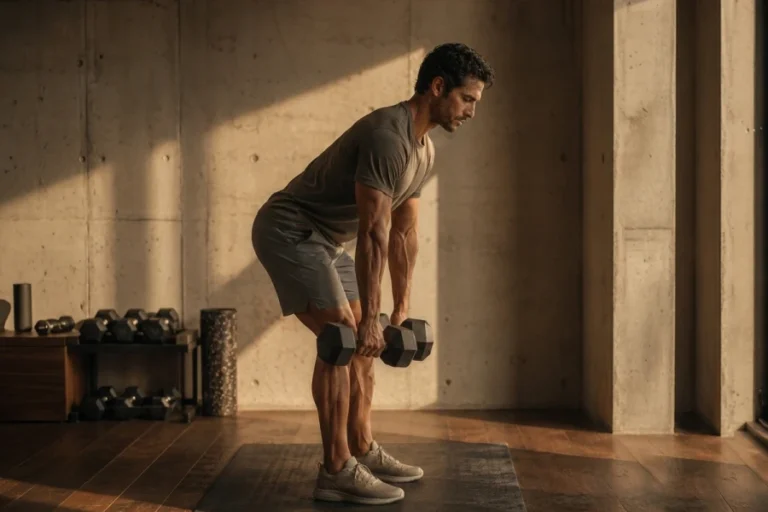
A full gym can be useful, but it is not the only place strength gets built. A dumbbell workout plan for men at home can remove many of the barriers that make training feel distant. There is no commute, no waiting for equipment, and no need for a complicated setup. What remains is the useful question: what can you repeat? A pair of dumbbells can support a surprising amount of focused work. They can also make your training more adaptable to real schedules. The key is not collecting endless exercise options. The key is choosing a simple structure that encourages regular practice. Minimal equipment works best when the plan has a clear purpose.
Why a Dumbbell Workout Plan for Men at Home Feels More Possible
Home training becomes valuable when it lowers the cost of starting. You can begin shortly after work or during a quieter part of the weekend. That convenience matters more than most people expect. It removes the negotiation that often happens before exercise. A home dumbbell blueprint gives that convenience a useful direction. Rather than browsing random routines, you can return to a stable pattern. Familiar movements make it easier to notice better control and stronger execution. They also reduce the temptation to change everything every week. Progress does not require constant variety. It requires enough consistency for your body to adapt.
Minimal Equipment Changes the Decision-Making
More equipment can sometimes create more confusion. You may feel pressure to use every station or try every new movement. Dumbbells simplify the menu without making training meaningless. They allow you to focus on basic patterns that serve many goals. Squatting, pressing, hinging, carrying, and rowing can all become part of a balanced session. The challenge is not finding more exercises. It is learning how to arrange the ones that matter. A minimal-equipment training approach helps you keep the plan grounded. With fewer variables, it becomes easier to recognize what needs adjustment. That clarity is especially useful for men returning to exercise after a long break.
How a Dumbbell Workout Plan for Men at Home Builds Skill
Strength training is not only about effort. It is also about learning how to move with control. Dumbbells encourage each side of the body to contribute independently. That can make weak points easier to notice. A slower pace gives you time to understand where a movement feels stable. It also helps you recognize when a weight no longer matches your form. At home, you can focus without comparing your session to anyone else’s. That privacy can be helpful while confidence is still growing. You can practice the basics as often as your schedule allows. Over time, the movements become more familiar. Familiarity creates the skill that makes heavier training safer and more productive.
Design the Session Around Real Energy
No training plan should assume that every day feels the same. Some days allow for a fuller session with several movements and steady rest. Other days call for a shorter version that keeps the habit alive. Build both versions into your week from the start. That way, a busy day does not force an all-or-nothing choice. A dumbbell session framework can give both options a shared shape. You might begin with a warm-up, choose two main movements, and finish with a short review. The details can change while the rhythm stays familiar. This makes training feel flexible without becoming random. It also gives you more chances to finish feeling capable.
When a Dumbbell Workout Plan for Men at Home Needs Restraint
Home workouts can tempt you to add more because the equipment is always nearby. However, more sets do not automatically produce better results. Good training leaves room for recovery, sleep, and the rest of your life. Pay attention to persistent pain, unusual fatigue, or a steady decline in form. Those signals deserve respect rather than a tougher response. Keep the focus on movements you can perform with control. If you are unsure about an exercise or health concern, seek qualified guidance. A measured approach is not less serious. It is what lets training remain part of your life for months. Sustainable progress has a quieter rhythm than most dramatic transformations suggest.
Track the Basics Without Overthinking Them
You do not need a complicated spreadsheet to improve a home workout. Write down the exercises, the weight used, and one honest observation. That observation might be about balance, pace, or how long you rested. Keep the record simple enough to use after every session. When the notes stay brief, they become more reliable. You can use them to decide whether one extra repetition makes sense next week. You can also spot when the same weight starts feeling more controlled. These small markers make improvement feel tangible. They remind you that strength often grows before it looks dramatic. A clear record helps you see that quieter progress and build from it.
Let a Dumbbell Workout Plan for Men at Home Grow With You
Start with the schedule you can protect now. Two or three sessions may be more useful than an ambitious daily promise. As the pattern becomes familiar, you can add challenge gradually. That may mean more control, a slightly heavier dumbbell, or another set. Let your recovery guide the next step. There is no prize for rushing past your current capacity. The strongest home routine is one you can revisit every week. It gives you a dependable place to return when life gets busy. With a pair of dumbbells and a clear structure, training can become remarkably accessible. That accessibility is often the difference between wanting to get stronger and actually doing it.